
Bradnam’s Stacking Doors Darwin: Locally Manufactured for the Top End
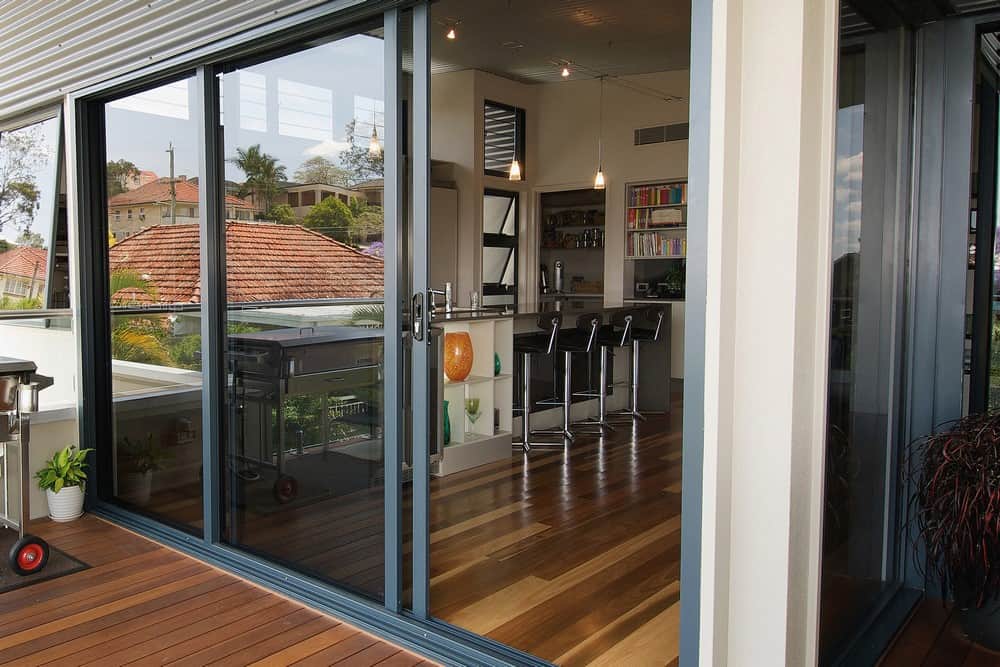
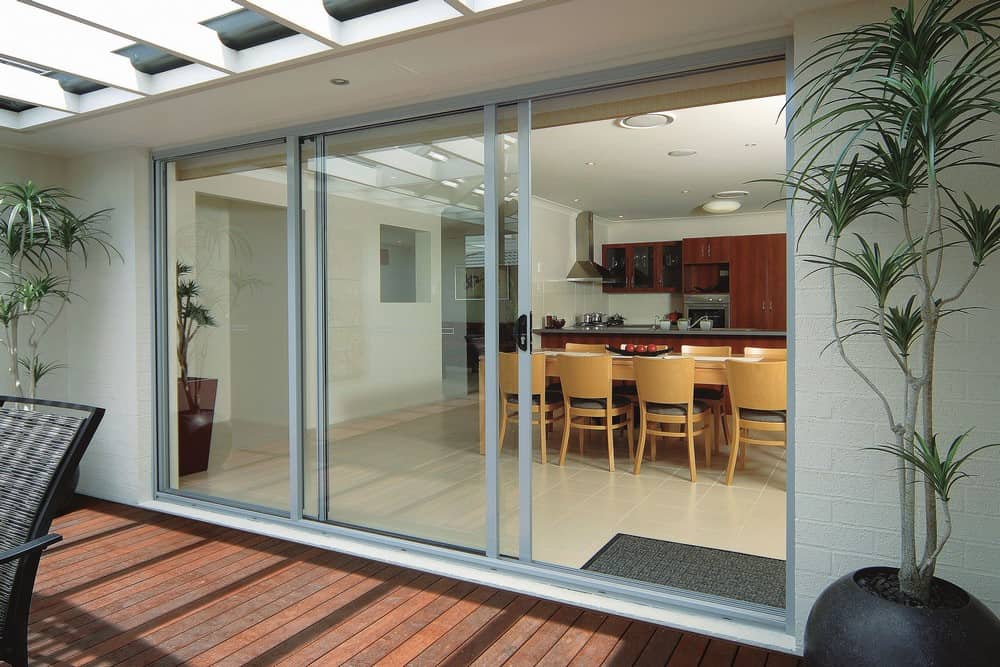
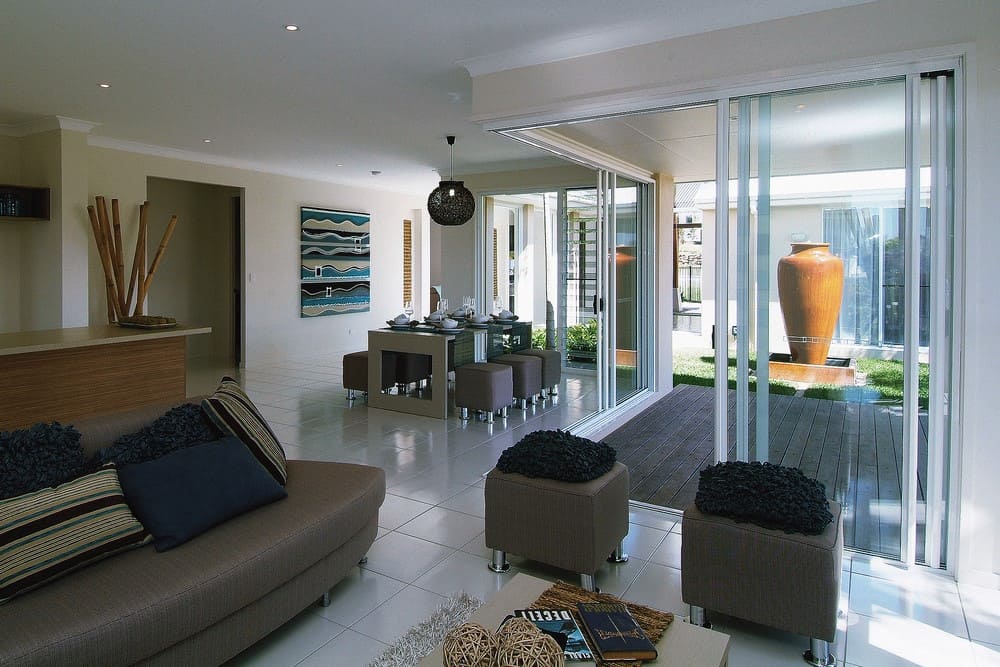
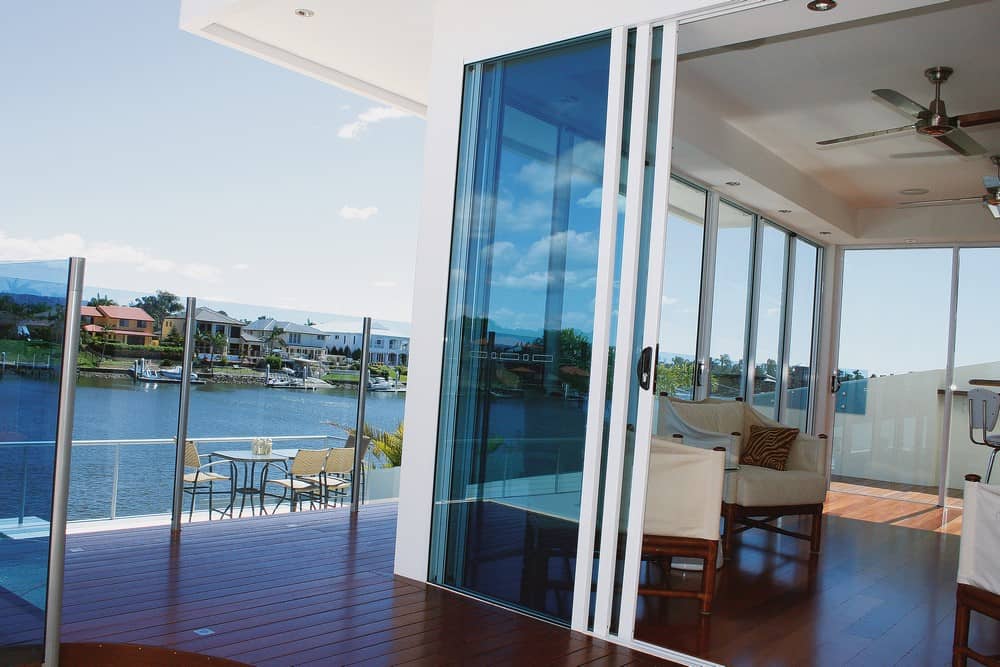
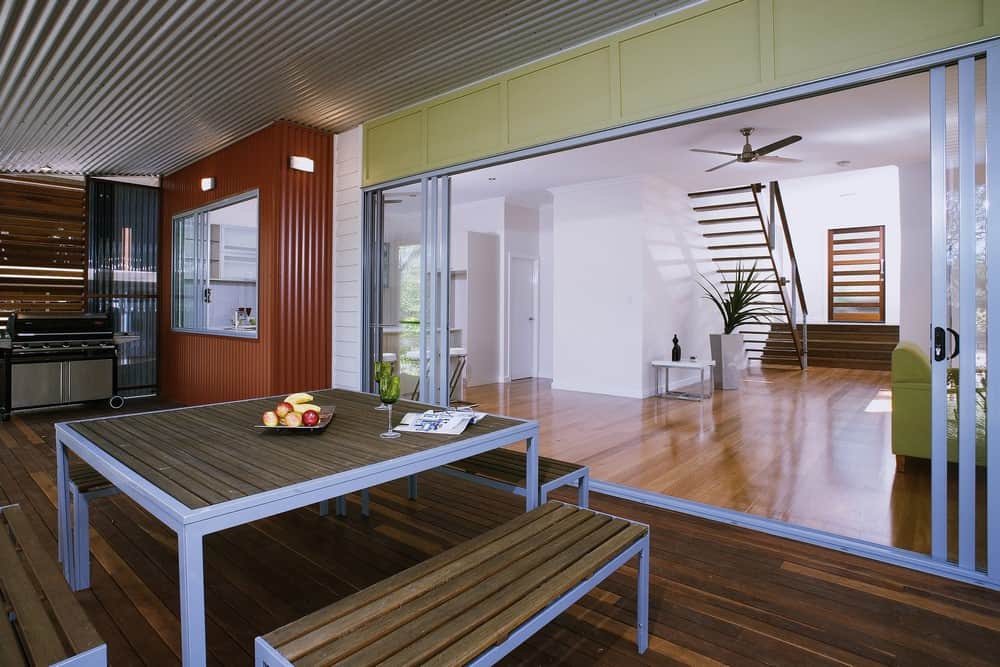
Darwin homes are designed around airflow. The whole point of a good alfresco area, a covered outdoor room, or a rear entertaining zone is being able to open the building up fully. Cracking a standard sliding door 600mm is not ventilation. A stacking door system is how you actually achieve a proper opening.
DABSCO has been manufacturing Bradnam’s stacking doors at our Winnellie factory since our founding in 1966. Every panel that leaves the factory is built to suit Darwin conditions: the humidity, the UV, the salt air, the cyclone season, and the extended wet that sits between. We are a licensed Bradnam’s fabricator, which means we do not ship product up from Brisbane or Sydney. We make it here, for here.
Why Stacking Doors Work in Darwin
Darwin’s climate runs on two primary modes: the wet, where you want to maximise airflow and manage rain ingress, and the dry, where you want wide-open access between inside and outside. A stacking door system performs across both because the entire opening clears completely. When panels stack off to one or both sides, there is no central frame element interrupting airflow or views. That is not achievable with a standard two-panel slider.
The 166mm wide frame on the Bradnam’s stacking system also matters in this climate. A heavier frame section handles racking loads better. This is important when a large, multi-panel door system sits in a wall that is working hard under Wind Region C conditions. Darwin is designated Wind Region C under AS/NZS 1170.2, which means structural wind loads on openings are significantly higher than what southern-state products are typically engineered for.
Powder-coated aluminium frames do not corrode in salt-air environments the way steel or untreated aluminium will. In coastal Darwin and waterfront Palmerston suburbs, where salt-laden onshore breezes are a constant from April through October, the long-term performance of the powder coat and any exposed hardware matters considerably. We specify hardware appropriate to the exposure category on every installation.
Frame System and Technical Specifications
The Bradnam’s Signature sliding door range, which includes stacking door configurations, uses a 166mm frame as the heavy-duty option. Full technical specifications are available from Bradnam’s product information and from DABSCO at your measure and quote appointment.
| Frame width | 166mm heavy duty aluminium (Signature range) |
| Frame finish | Powder coated aluminium |
| Available colours | Extensive Dulux powder coat range |
| Weather sealing | Full joint sealing system |
| Maximum water rating (Signature) | 600Pa |
| Maximum wind rating (Signature) | 4500Pa ULS |
| Maximum product height | 2700mm |
| Maximum product width | 6246mm |
| Maximum panel weight | 100kg |
| Security | Full locking options with internal sliding sash |
| Screen compatibility | Security and insect screens fitted to outside of frame |
| Cavity sliding | Available as cavity sliding option |
| BAL rating | Up to BAL 40 |
| Compliance standard | AS 2047 |
| Wind Region suitability | Wind Region C (Darwin, NT) |
The 166mm frame is not a cosmetic specification. In a multi-panel stacking system spanning 3, 4, or more metres, frame rigidity determines how the door performs over years of daily operation in tropical heat. Frames that flex introduce alignment problems: doors that stick, seals that compress unevenly, and hardware that wears prematurely. The heavier frame section resists this.
Full joint sealing across the system is important during the wet season. Darwin’s monsoonal rain arrives horizontally in a good storm. A door system that relies on lip seals alone, without joint sealing behind them, will let water track through points of weakness over time.
Stacking Door Configurations
Stacking doors are not a one-size product. The configuration covers how many panels there are, which direction they stack, and whether they stack to one side or split to both. These decisions determine what the door can actually do for your space.
| 2-panel, single stack | Narrower openings, bedrooms, studies | Up to approx. 70-75% of total width |
| 3-panel, single stack | Medium openings, transition areas | Up to approx. 65-70% of total width |
| 4-panel, double stack (2+2) | Wide alfresco openings | Up to approx. 90% of total width |
| 4-panel, single stack | Where one side is unobstructed | Up to approx. 75% of total width |
| 5-panel, single stack | Large openings requiring single-side clearance | Full clearance on one side |
| 6-panel, double stack (3+3) | Feature openings, large entertaining areas | Up to approx. 90% of total width |
| Cavity sliding option | Where no external stack-out space is available | Full clear opening with no visible panels |
For Darwin alfresco areas and tropical-living room layouts, the 4-panel double-stack (2+2) is the most common configuration we install. It delivers a wide, clear opening without requiring a large wall space for the stacking panels.
The cavity sliding option is worth discussing if your renovation or new build has the wall depth for it. In a cavity system, the stacking panels slide into a concealed pocket within the wall rather than being visible on the exterior. This gives you a completely clean reveal on both sides when the door is open. It requires planning at the framing stage and is not a retrofit option in most cases. Bradnam’s publishes specific guidance on cavity sliding door configurations. Discuss the requirements with our team at your meeting and quote.
Call DABSCO on (08) 8947 8111 to discuss which configuration suits your opening.
Glass Selection for Darwin Conditions
The frame is only part of the door system. The glass type you specify has a direct effect on how comfortable your home is, what your energy bills look like, and whether your WERS rating supports your NatHERS assessment. In Darwin, where cooling loads dominate year-round, and the sun angle is high, glass selection is not cosmetic.
| Standard clear float | High | High | Shaded openings only |
| Tinted glass (grey, bronze, green) | Moderate to low | Moderate | East and west-facing openings |
| Low-E coated glass | Low | Low to moderate | All orientations, NatHERS benefit |
| Laminated safety glass | Depends on substrate | Reduced | Where AS 1288 safety glazing is required |
| Double-glazed unit (IGU) | Low | Low | Where acoustic performance is also required |
In Darwin’s climate, a stacking door system facing north or west without solar shading from an external eave, a Luxaflex awning, or a pergola will drive significant heat gain into the building. Specifying a tinted or Low-E glass goes a long way toward managing this.
For new builds assessed under NatHERS, the WERS (Window Energy Rating Scheme) rating of your door and glazing combination affects your star rating. DABSCO can advise on which glass specifications contribute positively to your NatHERS assessment. If your project has specific glazing requirements in the energy report, bring those to your measure and quote appointment, and we will match the specification accordingly.
Where the opening is within a designated fire zone, and BAL (Bushfire Attack Level) requirements apply, glazing specifications will be dictated by the BAL assessment. This applies to rural-residential properties in areas like Humpty Doo and Batchelor, where BAL-12.5 to BAL-40 ratings are common.
Security and Insect Screen Integration
In Darwin, insect screens are not optional. Mozzies, midges, sandflies, and the general insect activity that comes with a tropical climate mean every opening needs a screen solution. On a stacking door system, screens are fitted to the outside of the door frame. This allows you to operate the glass panels independently of the screens.
DABSCO integrates Crimsafe security screens with stacking door openings. A Crimsafe screen fitted to a stacking door opening gives you security and insect protection simultaneously, without having to choose between them. The 304 grade Tensile-Tuff stainless steel mesh in the Crimsafe system is engineered for tropical coastal conditions and will not corrode in Darwin’s salt-air environment.
For openings where security is not the primary concern, standard insect screens are available. The right screen type depends on your exposure, your security requirements, and your budget. We cover all of this at the measure and quote stage.
The full locking options on the stacking door system, combined with the internal sliding sash, mean the door itself provides a meaningful first line of defence. The internal sliding sash locks independently and can be engaged without closing the entire panel system, which is useful during the dry season when you want airflow overnight but want the panels secure.
Stacking Doors vs Bi-Fold Doors in Darwin
This question comes up often, and the honest answer is that both systems have a place. If you are unsure which suits your space, read the comparison below, then call us or view the full Bradnam’s bi-fold door range on our website.
| Clear opening achieved | Very high. Panels slide to one or both ends | High. Panels fold and stack at one or both ends |
| Floor space required when open | None. Panels slide into a wall stack or cavity | Panels fold inward or outward, requiring clearance |
| Weather sealing | Excellent. Sliding operation maintains seal contact | Good. Hinge joints require attention over time |
| Hardware complexity | Lower | Higher. Multiple hinges per panel |
| Maximum panel count | 6+ panels achievable | Generally 5-6 before size becomes limiting |
| Cavity option | Available | Not typically available |
| Darwin airflow performance | Excellent | Excellent |
| Security screen integration | Fixed screens at outer frame | Requires retractable screens |
For large openings where the stacking panels can sit against a wall or inside a cavity, the stacking door is generally the cleaner solution. For openings where an internal or external fold-back is preferred, Bradnam’s bi-fold doors and windows are worth considering alongside a stacking system.
We have installed both systems throughout Darwin, Palmerston, Humpty Doo, and Katherine for over 60 years. If you are not sure which is right for your space, call us, and we will talk through it based on your actual opening dimensions and site conditions.
Compliance: What Darwin Builders and Owners Need to Know
Stacking door systems installed in Darwin must comply with the following standards.
AS 2047 — Windows and external glazed doors in buildings. This standard covers performance requirements for aluminium-framed windows and doors, including structural performance, weather resistance, and operating force limits. All Bradnam’s products manufactured by DABSCO are fabricated to AS 2047 specifications.
AS/NZS 1170.2 — Wind actions. Darwin sits in Wind Region C under this standard. Products specified for Wind Region C must be tested and rated to withstand the wind pressures applicable to this designation. Not all products sold in southern states meet Wind Region C requirements. DABSCO manufactures specifically for the NT market and specifies products rated for Wind Region C.
National Construction Code (NCC). The NCC sets out minimum performance requirements for glazed openings as part of the energy efficiency provisions. Darwin falls within Climate Zone 1 under the NCC, which has specific requirements around solar heat gain, shading, and ventilation.
NatHERS (Nationwide House Energy Rating Scheme). For new residential construction, a NatHERS energy rating is required in most cases. The window and door schedule, including frame type, glazing specifications, and WERS ratings, feeds directly into the NatHERS assessment. DABSCO can provide product specifications to support your NatHERS assessor.
AS 1288 — Glass in buildings: selection and installation. This standard governs where safety glazing is required. In doorways and low-level installations, laminated or toughened safety glass is specified. We apply this standard as a matter of course in our glazing recommendations.
Maintenance in Tropical Conditions
A Bradnam’s stacking door system installed by DABSCO will perform for decades with proper maintenance. In Darwin’s climate, the main maintenance considerations are as follows.
Track cleaning. Darwin’s dry season brings red dust and fine particulate matter that settles in the lower track. Regular cleaning of the track, ideally monthly during the dry season, prevents this debris from scoring the track surface and degrading the sliding action. Use a damp cloth rather than harsh abrasives.
Hardware lubrication. The sliding hardware, rollers, and lock mechanisms should be lubricated annually with a silicone-based lubricant. Do not use oil-based lubricants on aluminium tracks. They attract dust and create a paste that impedes operation over time.
Seal inspection. After each wet season, inspect the weatherseals and drain slots for any debris accumulation or signs of compression damage. The wet season puts a real load on sealing systems through sustained rain exposure. Catching a damaged seal early prevents water ingress from becoming a structural problem.
Screen care. If Crimsafe or insect screens are fitted, rinse them periodically with fresh water to remove salt and airborne particulates. This is particularly important for properties within 1-2km of the coast.
Frame condition. Powder-coated aluminium frames are low-maintenance by nature, but in high-exposure coastal locations, inspect the powder coat annually for any signs of chalking or localised damage. Small areas of damage should be touched up promptly to prevent corrosion of the underlying aluminium.
Finance Options
DABSCO offers two interest-free finance options on stacking door purchases.
Latitude Gem Visa. 6 months interest-free on purchases of $250 or more. 18 months interest-free on purchases of $1,500 or more. No early payout penalties.
Humm. Buy Now, Pay Later with no interest ever. DABSCO has partnered with Humm to provide a flexible payment solution across Darwin and the NT.
Finance options cannot be combined with other sales, discounts, or offers. Contact our office for current terms and conditions.
Why DABSCO for Stacking Doors in Darwin
DABSCO has been operating in Darwin since 1966. We are a licensed Bradnam’s fabricator, which means we manufacture Bradnam’s stacking door systems locally at our Winnellie factory. The product you receive is manufactured here, measured here, and installed by our own team.
We supply and install stacking doors across Darwin, Palmerston, Humpty Doo, Batchelor, Katherine, Alice Springs, Kununurra, Broome, Derby, Gove, Groote Eylandt, Bathurst Island, Maningrida, and remote NT and WA communities. If your project is remote, call us to discuss logistics and lead times.
Local manufacturing means lead times are shorter than importing from interstate. If there is ever a service issue, you are dealing with the people who made it.
For the full Bradnam’s windows and doors range available through DABSCO, including sliding windows, louvres, bi-folds, and French doors, visit our windows and doors product page.
Frequently Asked Questions: Stacking Doors Darwin
Are Bradnam’s stacking doors rated for Wind Region C?
Yes. DABSCO manufactures Bradnam’s stacking door systems at our Darwin factory, and the products are specified for Wind Region C as required by AS/NZS 1170.2. Darwin sits within Wind Region C, which means structural loading requirements for external openings are higher than in most southern states. The Bradnam’s Signature range carries a maximum wind rating of 4500Pa ULS. Contact DABSCO on (08) 8947 8111 to confirm specifications for your project.
How many panels can a stacking door have?
Bradnam’s stacking door systems are available in configurations from 2-panel through to 6-panel and beyond for large commercial or residential openings. Configurations can stack to a single side or split to both sides, such as a 3+3 or 2+2 split. The maximum panel count depends on structural framing, head beam capacity, and site conditions, which DABSCO assesses at the measure and quote stage. You can also review Bradnam’s full range of sliding and stacking door configurations on the manufacturer’s website.
Can stacking doors be fitted with security screens?
Yes. Security and insect screens are fitted to the outside of the stacking door frame. DABSCO installs Crimsafe security screens on stacking door openings, giving you both insect and security protection. The screens operate independently of the glass panels.
What is a cavity sliding stacking door?
A cavity sliding stacking door has the same panel system as a standard stacker, but the panels slide into a concealed cavity built into the wall rather than stacking on the exterior face. This gives a completely clear reveal on both faces of the opening when the door is open. The option requires planning at the framing stage and is generally specified for new builds or major renovations where the wall can be constructed to accommodate the cavity. Contact DABSCO on (08) 8947 8111 to discuss whether a cavity system suits your project.
What glass should I specify for a Darwin stacking door?
Glass selection depends on the orientation of the opening, the amount of external shading available, and any NatHERS or energy compliance requirements. For west-facing openings without external shading, a tinted or Low-E glass is recommended to reduce solar heat gain. DABSCO can advise on specific glass specifications to your measure and quote and can provide WERS-rated product information to support your NatHERS assessor if required.
How do stacking doors perform during the wet season?
The Bradnam’s Signature stacking door system achieves a maximum water rating of 600Pa, providing solid weather resistance during monsoonal rain conditions. The door track includes drain provisions to manage any incidental water entry. During the wet season, keep drain slots clear of debris and ensure any external screen tracks are also kept clean to prevent water pooling. Performance during severe cyclonic events depends on the full installation specification. Contact us to discuss cyclone-rated glazing and screen options for high-exposure properties.
Do stacking doors suit Darwin rental properties?
Yes, and they are a common specification in Darwin investment properties. The wide-opening capability suits tropical living. Powder-coated aluminium frames require minimal ongoing maintenance, which is an advantage in a rental scenario. Insect screen integration is essential for rental tenants in the Darwin climate and should be included in any stacking door specification.
What is the difference between a stacking door and a sliding door?
A standard sliding door typically has one panel that slides behind a fixed panel, giving approximately 50% of the opening width as a clear gap. A stacking door system has multiple panels that all move and stack at one or both ends, giving 75-90% or more of the total opening width as a clear, unobstructed gap. For Darwin, alfresco areas and indoor-outdoor living, stacking doors provide significantly more airflow and access than a standard slider. View the full range of Bradnam’s windows and doors available through DABSCO for a complete comparison of available systems.
Can DABSCO install stacking doors in remote NT communities?
Yes. DABSCO has a long history of supplying and installing products in remote NT and WA communities, including Gove, Groote Eylandt, Bathurst Island, and Maningrida, as well as Kununurra, Broome, and Derby. Remote projects require additional logistics planning. Contact DABSCO online or call (08) 8947 8111 to discuss your project, and we will advise on lead times and site visit scheduling.



Product Enquiry
FINANCE

Shop smarter with flexible, long-term Interest Free Payment Plans with Latitude Gem Visa credit card Get 6 months Interest Free instantly on purchases $250 and over – anywhere, anytime.
Interest Free offers of 18 months are available with purchases over $1500. No Early Payout Penalties. No charge for early payout of account.
More information and conditions can be found here or contact our office for current finance promotions.
FINANCE

Buy any DABSCO product now and pay later, with no interest ever*, with HUMM.
DABSCO has partnered with humm to bring a convenient and affordable payment solution to you.
More information and conditions can be found here or contact our office for current finance promotions.
Using Finance options, cannot be used in conjunction with any other sales, discounts or offers.