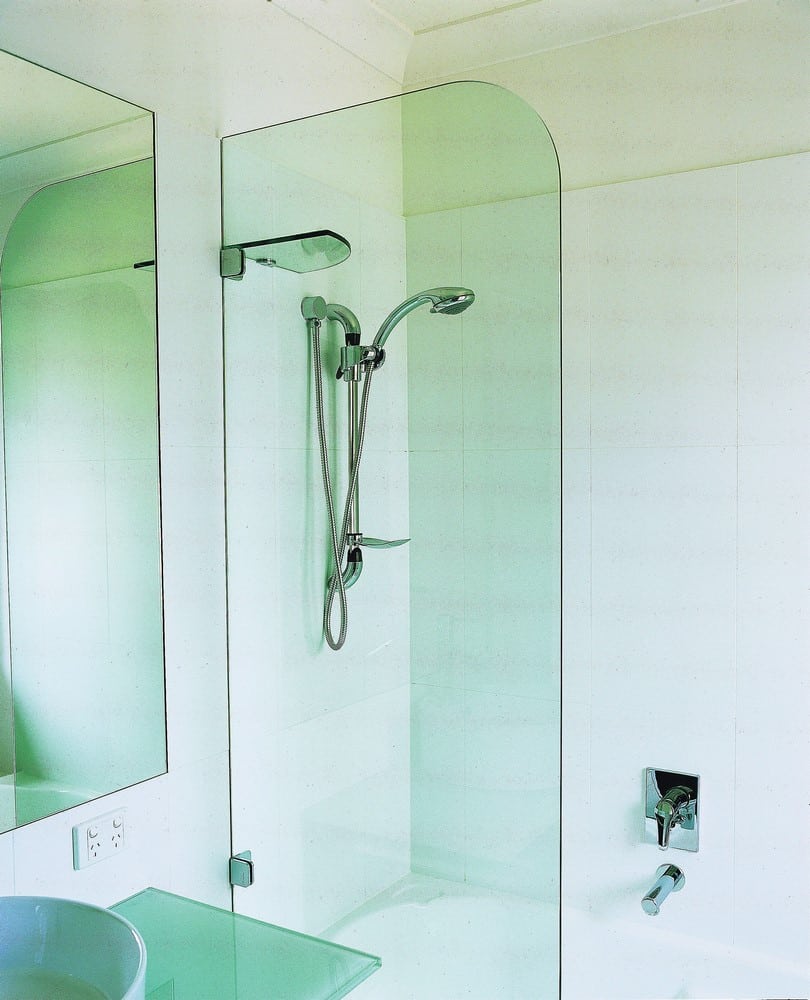
What Are Shower and Bath Panels?
Shower and bath panels are single glass screens fixed at one side of a wet area to act as a water spray barrier. Unlike an enclosed shower screen system, panels do not form a complete enclosure. They are positioned to protect the bathroom floor and walls from water dispersal during showering or bathing without the cost or complexity of a full surround. In Darwin bathrooms, panels are commonly used over freestanding baths, alongside inset baths, and at the open side of a shower recess where a door is not needed.
The distinction between a fixed panel and a pivot panel matters during the buying decision. A fixed panel is stationary and provides a permanent barrier. A pivot panel swings open on a pivot hinge, giving you the option to step in without needing to reach around the glass. For bathrooms where easy access is important, or where the layout makes it difficult to step past a fixed panel, the pivot configuration is worth the additional cost.
Glass Thickness Options for Shower and Bath Panels
| Glass Thickness | Typical Application | Stability | Notes |
| 6mm toughened | Small fixed panels, framed systems | Adequate with full frame support | Budget-conscious option for shorter panels |
| 8mm toughened | Mid-size fixed and pivot panels | Good | Most common choice for residential bath panels |
| 10mm toughened | Larger frameless fixed panels | Excellent | Preferred where panel exceeds 900mm in height |
For most Darwin residential bath panel installations, 8mm toughened safety glass is the standard recommendation. It provides enough rigidity for pivot hardware to operate without flex, and handles the movement and impact that occurs in a busy bathroom. Panels over 900mm tall in a frameless configuration benefit from 10mm glass, which reduces deflection at the top edge and improves the feel of the installation.
Frame Styles Available for Darwin Bathrooms
DABSCO supplies shower and bath panels in three frame configurations, each suited to different bathroom styles and budgets.
Frameless panels use polished or brushed metal clamps and standoffs rather than a continuous aluminium channel around the glass perimeter. The glass itself carries most of the structural load, which is why 10mm toughened glass is preferred for taller frameless panels. In Darwin homes, frameless panels work well in contemporary renovations and new builds where a clean aesthetic is the goal. With no aluminium channel to collect moisture, frameless systems are also easier to keep mould-free during the wet season.
Semi-frameless panels use a channel or rail along one side and the base, leaving the top and leading edge of the glass open. This balances the stability benefits of some framework against a cleaner visual finish compared to a fully framed panel. Semi-frameless systems accept 6mm or 8mm glass, depending on the panel size.
Fully framed panels enclose the glass perimeter in an aluminium channel, available in white or silver powder coat finishes. The frame adds rigidity, meaning 6mm glass is generally sufficient for standard panel sizes. For Darwin homes on a renovation budget, a framed bath panel in silver finish provides a durable and low-maintenance result that holds up well in humid conditions.
Hardware finish selection matters more in Darwin than it does in southern Australian cities. Coastal salt air and persistent wet-season humidity accelerate corrosion on lower-grade hardware. DABSCO uses hardware appropriate for tropical and coastal environments, which extends the service life of hinges, brackets and clamps considerably.
Fixed vs Pivot Panels — Which Is Right for Your Bathroom?
| Feature | Fixed Panel | Pivot Panel |
| Entry access | Step around the glass | Swing panel open to enter |
| Hardware | Wall clamps or channel | Pivot hinge at top and base |
| Cost | Lower | Slightly higher |
| Suitable for | Baths, open shower recesses | Shower recesses needing clear access |
| Glass thickness | 6mm to 10mm | 8mm to 10mm recommended |
| Maintenance | Minimal | Pivot hinge requires periodic check |
A fixed panel is the right choice for most bath installations. The glass is stationary, there are no moving parts to maintain, and the installation is straightforward. For shower recesses where easy step-in access is needed — particularly in bathrooms used by older residents or where the recess depth is limited — a pivot panel removes the need to step around or over the glass edge.
DABSCO’s Pivotech bath panels are a well-regarded option in this category and are stocked to suit common Darwin bathroom configurations.
Darwin Climate Considerations for Bath Panels
Darwin bathrooms face humidity levels and condensation conditions that southern Australian bathrooms rarely experience. During the wet season, bathroom surfaces can remain damp between uses if ventilation is inadequate. This affects both the glass and the hardware over time.
For glass, the primary concern is the silicone sealing at the base and wall junction. Silicone in a tropical bathroom degrades faster than in a dry climate if it is not a high-quality, mould-resistant product. DABSCO uses appropriate silicone products for NT conditions, but the seal should still be inspected annually and replaced if it shows signs of breakdown.
For hardware, the concern is corrosion. Frameless and semi-frameless panels rely on metal clamps and brackets that are exposed rather than concealed within a frame. In a Darwin home close to the coast or in a poorly ventilated bathroom, stainless steel or corrosion-resistant hardware is the appropriate specification. Ask specifically about hardware grade when getting a quote — it affects longevity more than most homeowners realise.
Measuring and Installation
Shower and bath panel installations in Darwin frequently involve complications that standard measurements do not capture. Older Darwin homes, particularly elevated timber homes built before the 1990s, often have walls that are not plumb and floors that are not level. A panel cut to a nominal measurement without accounting for the actual wall angle will not sit flush and may create water ingress points at the seal.
DABSCO measures every installation on-site before fabricating the glass. This is not an optional step — it is the only way to ensure the panel fits correctly in a Darwin home where building tolerances can vary considerably from what the floor plan suggests. We cut glass to your specific measurements in our Winnellie workshop, which means lead times are shorter than using an interstate fabricator, and any adjustments can be made quickly.
FAQ
Q: What is the difference between a shower panel and a shower screen?
A shower panel is a single fixed or pivot glass barrier. A shower screen typically refers to a multi-panel or door system that encloses a shower recess more completely.
Q: What glass thickness is used for bath panels in Darwin?
Most Darwin bath panel installations use 8mm toughened safety glass. Larger frameless panels over 900mm tall are better suited to 10mm glass for added rigidity.
Q: Are bath panels suitable for Darwin’s wet season humidity?
Yes, provided the glass meets AS/NZS 2208 safety glazing requirements, hardware is corrosion-resistant, and silicone sealing is maintained annually in tropical conditions.
Q: Do DABSCO bath panels comply with Australian safety glazing standards?
Yes. All panels supplied by DABSCO use toughened safety glass compliant with AS/NZS 2208 and AS 1288, as required under the National Construction Code for wet area applications.
Q: What frame styles are available for bath panels?
DABSCO supplies bath panels in frameless, semi-frameless and fully framed styles. Framed panels are available in white or silver aluminium finish.
Q: Can bath panels be custom-cut to fit unusual bathroom layouts?
Yes. DABSCO fabricates glass in-house at Winnellie, meaning panels can be cut to suit non-standard dimensions, angled walls and sloped floors common in older Darwin homes.
Q: How long does a bath panel installation take?
Most single bath panel installations are completed within a few hours once the glass has been fabricated. Measure, fabrication and installation are typically arranged within a week for standard Darwin residential jobs.