Panel Glide Blinds Darwin | Made-to-Measure Supply and Installation

If you have a wide sliding door opening, a full-width glass wall, or an open-plan space that needs dividing without a permanent structure, panel glide blinds are worth looking at seriously. Darwin homes are built around outdoor access. Wide openings, large glass spans, and layouts designed for cross-ventilation mean most standard blind systems either look wrong at scale, operate awkwardly, or need to be doubled up to cover the opening properly.
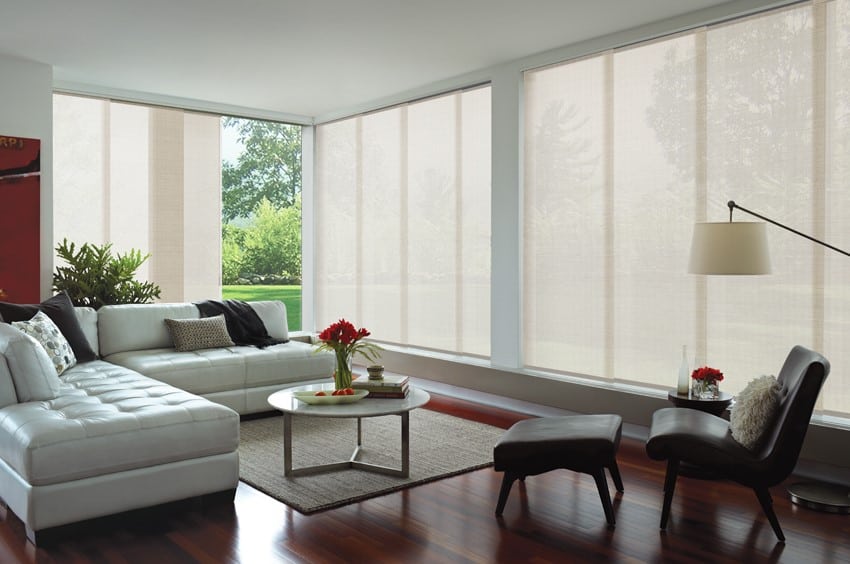
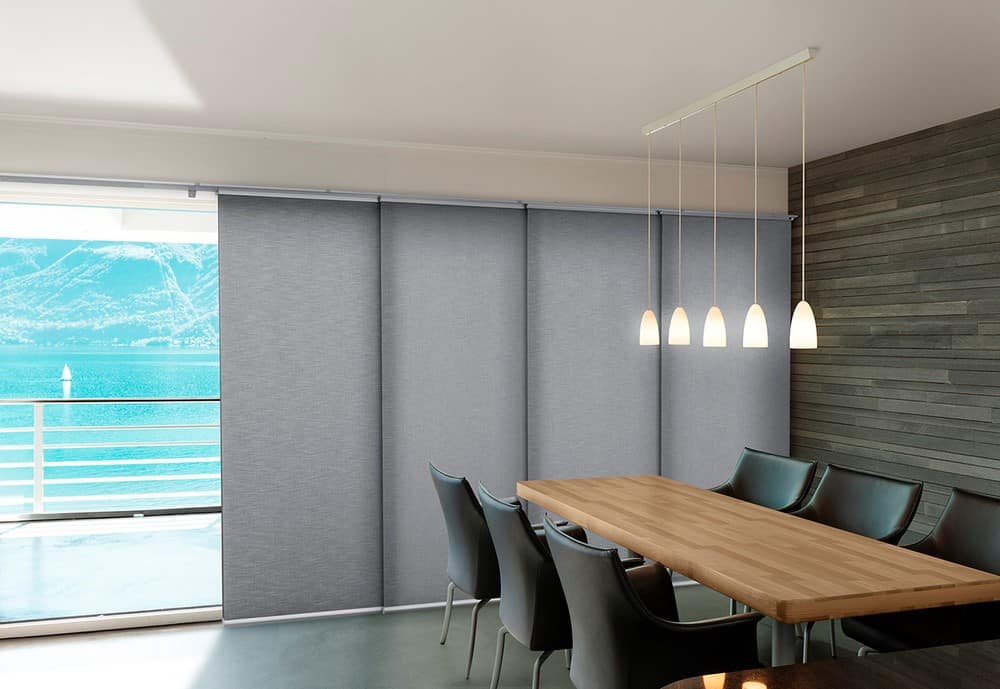
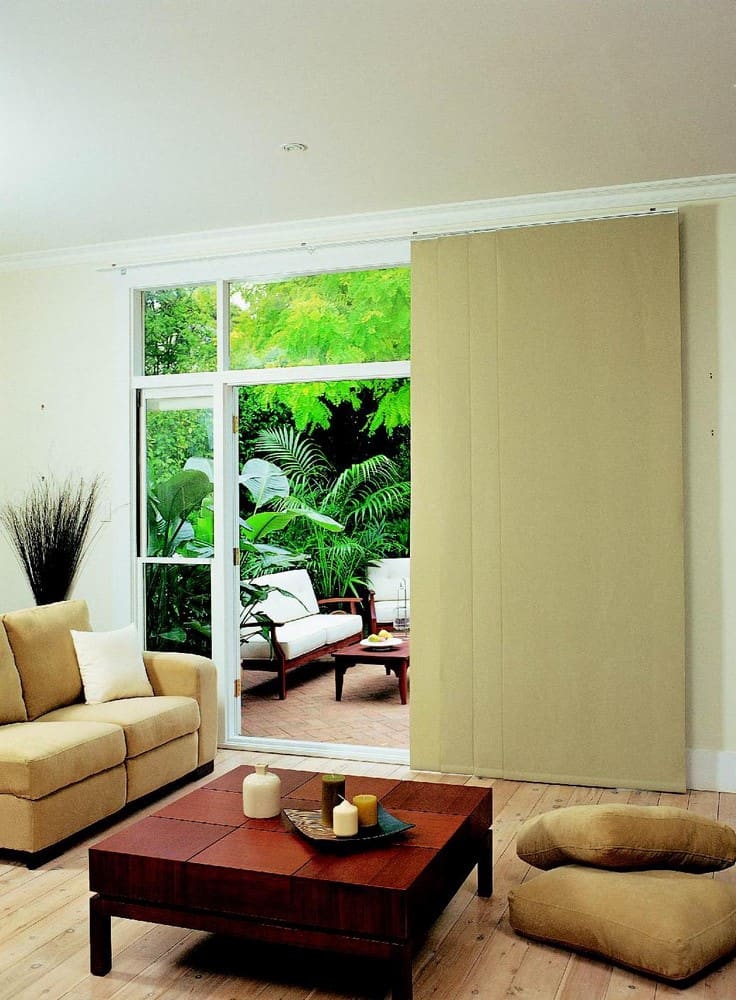
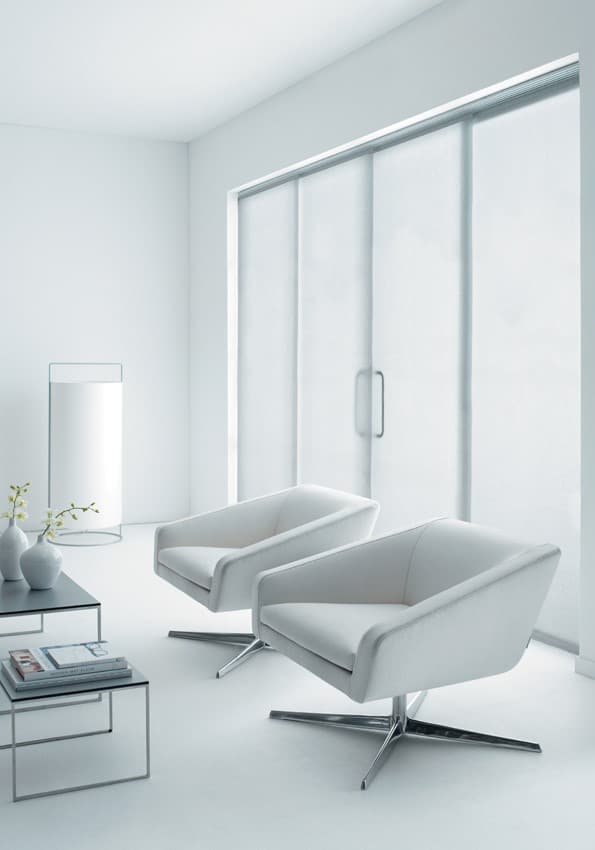
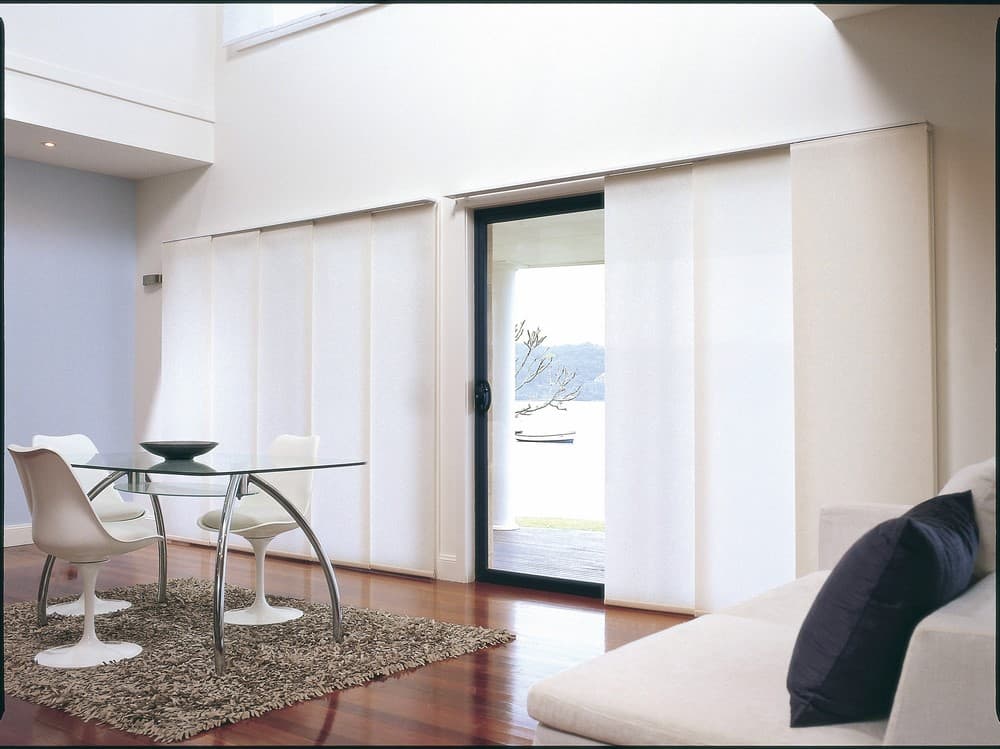
Panel glide blinds work differently. Wide fabric panels travel across a ceiling-fixed or wall-fixed multi-channel track, stacking behind each other when open and pulling across to form a continuous fabric screen when closed. The mechanism is simple, the hardware sits neatly above the opening, and the finished result looks proportionate on openings where a roller blind would look undersized or a vertical blind starts to feel dated.
DABSCO has been supplying and installing panel glide blinds across Darwin, Palmerston, and the NT since 1966. Every job is made-to-measure.

What Panel Glide Blinds Actually Are (and Where They Work Best)

Panel glide blinds are not a variation of a roller blind, and they are not the same thing as a vertical blind. The mechanism is its own category. Each panel is a flat, wide fabric section, typically between 600mm and 1,000mm wide, suspended from a carrier that runs in a channel along the track above. Multiple panels share the same track system. When you open them, the panels stack on top of each other at one end. When you close them, they distribute evenly across the opening.
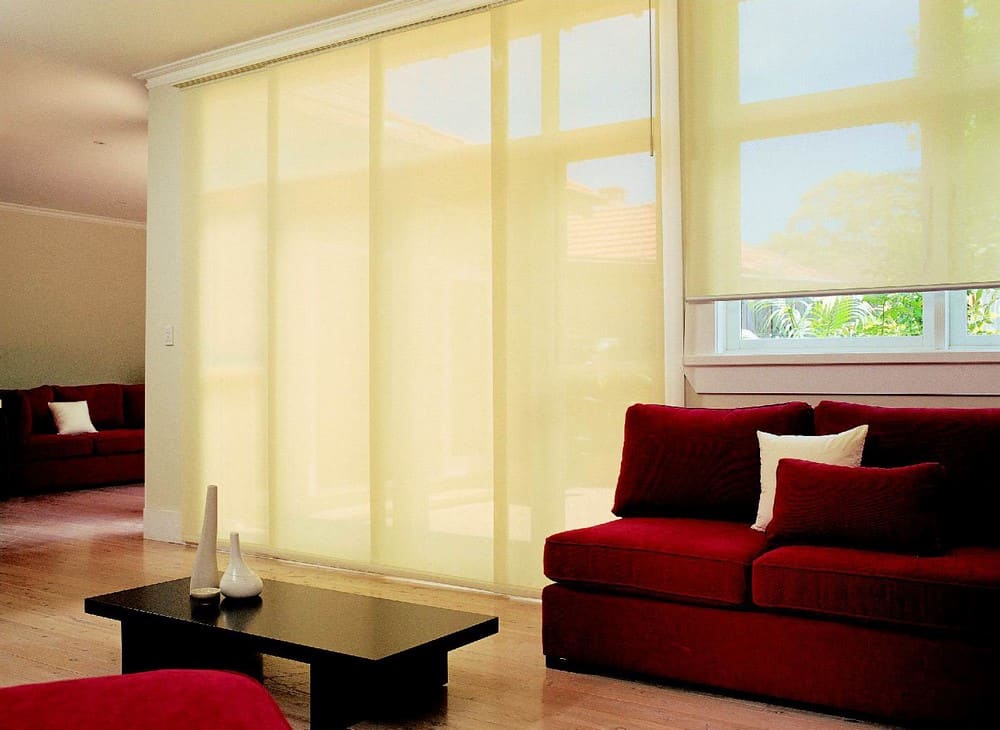
In Darwin, these work best across sliding door openings in the 2,100mm to 4,200mm range, across large fixed glass panels where you want solar control without a full blockout, and as soft dividers in open-plan homes where the living and dining areas benefit from some separation during the afternoon heat.
They are less suited to narrow windows under 1,200mm, where a roller blind is a simpler and more economical choice. The window furnishings Darwin page covers the full range if you are weighing up options across multiple rooms.

Fabric Choice in a Darwin Climate

This is where most buyers make either a good decision or an expensive mistake. Darwin’s UV index regularly hits extreme levels during both the wet and dry seasons. Fabrics that perform well in Sydney or Melbourne for five to seven years can degrade noticeably faster in the Top End if they are not specified correctly.
For living areas with east or west exposure, a sunscreen fabric in the 3% to 5% openness range is the practical choice. The openness factor is the percentage of open weave in the fabric: a 3% fabric lets through less light and heat than a 10% fabric and provides better daytime privacy from street level, but reduces outward view clarity. For most Darwin living rooms with morning or afternoon sun through wide glass, 3% to 5% gives you genuine heat reduction without making the space feel enclosed during the day.
Blockout fabric panels are specified for bedrooms, particularly in unit developments and elevated homes in Palmerston or the Darwin CBD, where ambient light at night is a real issue. A true blockout panel glide in a bedroom eliminates light bleed around the panel edges better than most roller blind installations because the panels sit flat and close-fitted against each other across the full opening width.
For any position adjacent to an external door that stays open during the wet season, or in a bathroom with a window onto a courtyard, ask about moisture-resistant fabric options. Standard blockout fabrics can degrade at the backing layer when they are repeatedly exposed to condensation. It is a common problem in Darwin’s wet seasons that rarely gets mentioned until the fabric starts to deteriorate.

Track Configuration and Stacking Direction

Getting the track configuration right at the measure stage saves problems later. The three main decisions are: how many panels, which direction they stack, and how the track is mounted.
Panel count is determined by the opening width and the panel width you choose. A 2,400mm sliding door with 600mm panels uses four panels. A 3,600mm opening with 800mm panels uses four or five. Wider panels look more contemporary but require a track with sufficient channel depth to stack without the open end extending past the wall or door frame.
Stacking direction should match how you use the door. If your sliding door operates to the left, the panels should stack left so the operating path stays clear when the blind is open. Splitting from the centre works well for fixed glass panels or openings that are accessed from the middle.
Track mounting options are surface-fixed to the ceiling, recessed into a ceiling reveal, or wall-mounted on a fascia above the opening. Recessed mounting is only practical on new builds or major renovations where the ceiling is open during construction. For most Darwin renovation installs, surface-fixed to the ceiling with a neat fascia cover is the standard approach and looks clean when done properly.

Motorised Panel Glide Blinds

Motorisation is worth considering for any panel glide system covering a wide opening. Manually operating a four or five-panel system across a 3.6 metre opening is fine, but a motorised track eliminates the wand entirely and integrates into a broader home automation setup if that is where the project is heading.
Battery motors are the practical choice for retrofit installations in Darwin homes where running electrical cable to the headrail position would require significant wall work. A good quality battery motor on a panel glide system will run for twelve months or more on a single charge under normal daily use.
Hardwired motors are preferred in new builds and major renovations where electrical provision is planned into the construction stage. Both options support remote control operation, and depending on the motor platform, app, and voice control integration with Google Home, Amazon Alexa, or Apple HomeKit is available.
For larger commercial fit-outs or multi-room residential projects, DABSCO can advise on centralised control options at the consultation stage.

Child Safety and Cord Compliance

Panel glide blinds operated by a wand are a lower-risk option than corded blind systems because the wand is rigid and cannot form a loop. Where any cord or chain is part of the system, the ACCC mandatory safety standards for blinds and curtains apply, including requirements for cord length, cord cleats, and chain tensioner devices. Motorised systems remove loose cords from the equation entirely.
If you have young children in the home, it is worth raising cord safety at the measure appointment rather than assuming the system specified is already compliant. The ACCC Product Safety guidance on window coverings covers current requirements and is updated when standards change.
The Australian Window Association also provides industry guidance on compliant window furnishing installation practices.

Panel Glide vs Vertical Blinds for Darwin Sliding Doors

Panel Glide BlindsVertical Blinds
Visual finishFlat, contemporary panelsHanging slat system
Best opening width1,200mm and above800mm and above
Panel or slat width600mm to 1,000mm89mm or 127mm
Darwin dust accumulationLow (flat surface, minimal edges)Moderate (between slats and along vane edges)
Fabric optionsSunscreen, blockout, light-filteringPVC, fabric, translucent
Moisture performanceExcellent with correct fabricGood for PVC; fabric vanes need monitoring
Child safety (wand-operated)YesYes
Motorised optionYesYes
Relative costHigherLower
Vertical blinds remain the more economical choice for standard residential sliding doors, and they are practical and reliable in Darwin conditions. Panel glide blinds suit buyers who want a cleaner contemporary finish, particularly in open-plan homes and newer unit developments where the visual quality of the finish matters.

Frequently Asked Questions

What openings are panel glide blinds suited to in Darwin?
Openings from around 1,200mm wide. Most Darwin installs are across 2,100mm to 3,600mm sliding door spans or wide glass wall sections. They also work as room dividers in open-plan layouts.
How many panels do I need for my sliding door?
Panel count depends on the opening width and the panel width you choose. A standard 2,400mm door with 600mm panels uses four panels. Your measure appointment confirms this.
What is the best fabric for panel glide blinds in Darwin?
Sunscreen fabric in 3% to 5% openness for living areas with strong sun exposure. Moisture-resistant blockout for bedrooms and any position near an opening that stays used during the wet season.
Are panel glide blinds child safe?
Wand-operated systems are low-risk as the wand cannot form a cord loop. Motorised systems eliminate cords entirely. Any system with a cord must comply with ACCC mandatory safety standards.
Can panel glide blinds be motorised?
Yes. Battery motors suit retrofit installs. Hardwired motors suit new builds. Both support remote and, depending on the motor platform, app and voice control.
Do panel glide blinds handle Darwin’s humidity?
Yes, provided the fabric is specified correctly. Moisture-resistant options are available for high-humidity positions. The track hardware is low-maintenance but benefits from an annual dust-out, particularly after the dry season.
How is the track mounted?
Surface-fixed to the ceiling, recessed into a ceiling reveal (new builds), or wall-mounted above the opening with a fascia. The measure appointment determines which suits your specific opening and ceiling type.
How long does installation take?
A single opening typically takes one to two hours. Motorised installs with electrical work or jobs across multiple openings will take longer. DABSCO confirms timing at the quote stage.

Product Enquiry

Luxaflex Panel Glide

FINANCE

Shop smarter with flexible, long-term Interest Free Payment Plans with Latitude Gem Visa credit card Get 6 months Interest Free instantly on purchases $250 and over – anywhere, anytime.

Interest Free offers of 18 months are available with purchases over $1500. No Early Payout Penalties. No charge for early payout of account.

More information and conditions can be found here or contact our office for current finance promotions.

FINANCE

Buy any DABSCO product now and pay later, with no interest ever*, with HUMM.

DABSCO has partnered with humm to bring a convenient and affordable payment solution to you.

More information and conditions can be found here or contact our office for current finance promotions.

Using Finance options, cannot be used in conjunction with any other sales, discounts or offers.