In Darwin’s climate, where solar intensity is extreme for most of the year and afternoon west-facing windows can become genuinely uncomfortable, internal sunscreen blinds Darwin homeowners are fitting are doing real work: cutting heat load, reducing UV entry, and making rooms liveable without requiring air conditioning to carry the full burden alone.
What Are Internal Sunscreen Blinds and How Do They Work?
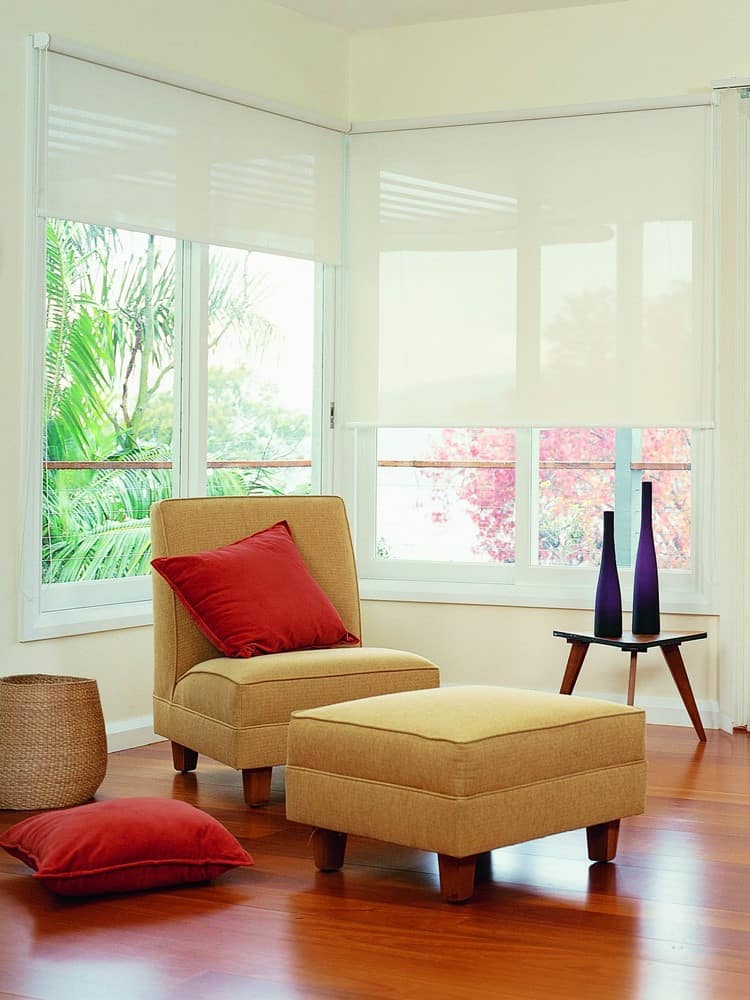
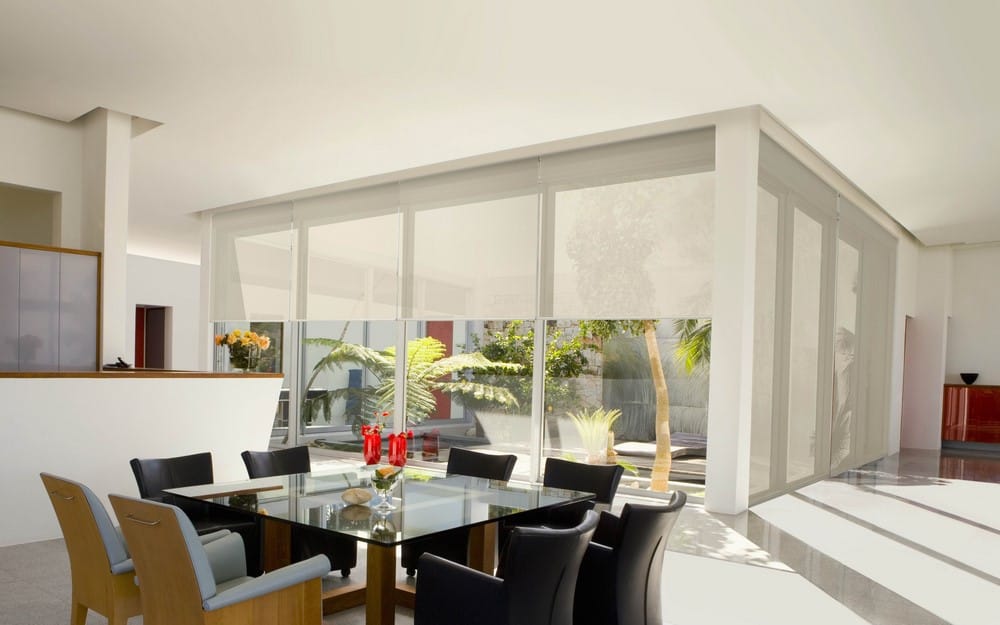
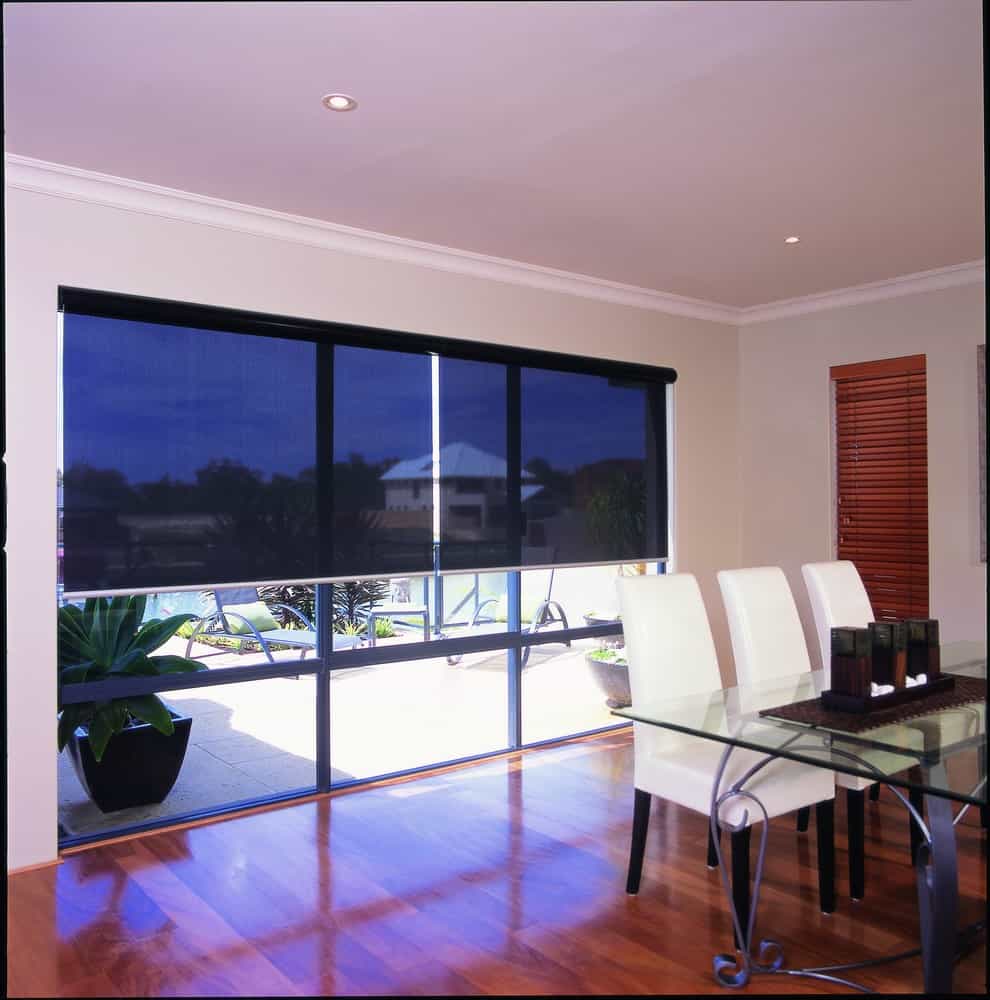
Internal sunscreen blinds use a woven mesh fabric, typically polymer-coated fibreglass, to filter sunlight rather than block it entirely. The weave allows outward visibility while intercepting a significant portion of solar radiation before it converts to heat inside the room. The tighter the weave, the less light passes through and the greater the heat reduction. The openness of the weave is measured by the openness factor, expressed as a percentage.
A 1% openness factor fabric is a very tight weave: high heat and glare reduction, limited view-through, best suited to rooms facing direct western afternoon sun in Darwin. A 5% openness factor is more open: good glare reduction, clearer view, and more natural light retained. A 10% openness factor is best suited to rooms where you want privacy from external observation during daylight hours, while still allowing a reasonable light level in. Most Darwin homeowners fitting sunscreen blinds to living areas and bedrooms with significant solar exposure will find a 3% to 5% openness factor suits their needs without making rooms feel dark.
Why Internal Sunscreen Blinds Are Particularly Relevant in Darwin
Darwin sits in a hot, humid climate zone where solar heat gain through glass is one of the primary contributors to indoor heat load. As
YourHome’s guidance on glazing in hot climates confirms, in climates such as Darwin, a low solar heat gain coefficient is a priority, and internal shading devices that intercept solar radiation play a direct role in reducing cooling demand. East and west-facing windows in Darwin are most problematic: morning and afternoon sun arrives at low angles that external eave overhangs cannot effectively shade, making internal sunscreens one of the few practical options for managing heat entry from those orientations.
UV exposure in Darwin is also significantly higher than in southern states year-round, not just in summer. Sunscreen fabrics with UV-blocking properties protect flooring, furniture, and soft furnishings from the bleaching and degradation that direct sunlight causes. A quality sunscreen fabric with strong UV-blocking properties is one of the more cost-effective ways to extend the life of interior finishes in a Darwin home.
Wet season humidity is a further consideration. The polymer-coated fibreglass construction used in Luxaflex Internal Sunscreen fabrics does not absorb moisture, which means the fabric resists mould and mildew in Darwin’s build-up and wet season conditions better than natural fibre alternatives. This matters particularly in bedrooms and living rooms that may have windows open during tropical evenings before the rain arrives.
Openness Factor Selection Guide for Darwin Rooms
Choosing the right openness factor is the most important decision when specifying internal sunscreen blinds. Darwin’s solar intensity means that a fabric that might be adequate in Brisbane will often be insufficient on a western-facing window here.
| Room and Orientation | Recommended Openness Factor | Reason |
| West-facing living room, direct afternoon sun | 1% to 3% | High heat and glare reduction needed; view-through is secondary |
| North-facing bedroom, moderate sun | 3% to 5% | Balance between glare control and retained natural light |
| East-facing home office, morning glare | 3% to 5% | Reduces low-angle morning glare without darkening workspace |
| Living area with pool or garden outlook | 5% to 10% | View preservation is a priority; some glare accepted |
| Bathroom or utility window | 5% to 10% | Privacy during daylight; light filtering preferred over blockout |
For rooms where heat reduction is critical, and the view is secondary, pairing a sunscreen roller blind with a blockout roller blind in a dual system gives full flexibility. See the
Luxaflex roller blinds range for dual roller options.
Sunscreen Blinds vs Blockout Blinds: Which Does Darwin Need?
Sunscreen and blockout blinds serve different purposes, and many Darwin homes benefit from both in different rooms or as a dual system on the same window. Sunscreen fabric intercepts solar radiation while maintaining view-through and allowing diffused natural light; blockout fabric eliminates light entirely, preventing early morning sun from entering bedrooms and providing complete privacy at night.
For living areas, sunscreen is almost always the better daytime choice in Darwin: it reduces heat load and glare while keeping the room connected to the outdoor environment. For bedrooms, particularly in houses where east-facing windows receive early morning tropical sun at 5:30 AM, blockout is essential for sleep quality. A dual roller system with a sunscreen and a blockout blind on the same headrail gives complete control: sunscreen during the day, blockout at night.
Roman shades and panel glides in sunscreen fabric are an alternative to roller blinds for those who prefer a softer aesthetic or are fitting a larger sliding or stacking door opening.
Luxaflex Roman shades and
Luxaflex panel glide blinds are both available in sunscreen fabrics through DABSCO.
Internal vs External Solar Control for Darwin Homes
Internal sunscreen blinds and external shading devices such as awnings and outdoor blinds both reduce solar heat gain, but they work at different points in the heat transfer process. External shading intercepts solar radiation before it reaches the glass, which is more efficient because the heat never enters the building envelope. Internal shading intercepts radiation that has already passed through the glass, so a small amount of heat is already inside the room.
In practice, many Darwin homes use both. External shading on north and west elevations reduces peak heat load; internal sunscreen blinds provide fine-grained control of glare and light throughout the day, and protect furnishings from UV exposure regardless of external shading. For homes where external awnings are not feasible (strata-titled apartments, heritage overlays, or specific architectural constraints), internal sunscreens carry more of the solar control burden, and a lower openness factor is appropriate. See the
Luxaflex awnings Darwin range for external shading options.
Operating Systems: Chain Drive and Motorised Sunscreen Blinds
Luxaflex Internal Sunscreens are available with chain drive or motorised operation. For most residential installations, a chain drive is a straightforward and cost-effective choice. For windows that are difficult to reach, above stairwells, or in commercial fit-outs requiring regular adjustment, motorised operation offers genuine practical benefit.
Child safety is a mandatory consideration when specifying chain-operated blinds. Under the
ACCC mandatory standard for blinds, curtains, and window fittings, chain-operated window coverings must be installed with chain tensioners or cleats to prevent loose loops from forming within reach of children. The
ACCC’s corded internal window coverings guidance specifies that cords cannot form a loop of 220mm or longer below 1,600mm above floor level. Motorised sunscreen blinds eliminate cord safety concerns entirely and are worth considering in any room regularly used by young children.
DABSCO installs both chain drive and motorised sunscreen blinds, including integration with smart home systems where required.
FAQ: Internal Sunscreen Blinds Darwin
What is the openness factor in sunscreen blinds?
The openness factor is the percentage of the fabric that is open weave. A 1% openness factor means a tight weave with high heat and glare reduction but limited view-through. A 10% openness factor means a looser weave with more light and clearer view-through but less heat control.
Are internal sunscreen blinds effective at reducing heat in Darwin?
Yes. Sunscreen fabrics intercept a significant proportion of solar radiation before it converts to heat inside the room, reducing heat load on west and east-facing windows where external eave overhangs are ineffective against low-angle sun.
What is the difference between sunscreen and blockout roller blinds?
Sunscreen fabric filters light, reduces glare, and blocks UV while maintaining view-through. Blockout fabric eliminates light entirely. Many Darwin homes use both on the same window via a dual roller system.
Do sunscreen blind fabrics handle Darwin’s wet season humidity?
Polymer-coated fibreglass sunscreen fabrics are moisture-resistant and do not absorb water, making them well-suited to Darwin’s wet season conditions and suitable for rooms that may experience high humidity.
Can I get sunscreen blinds as Roman shades or panel glides, not just rollers?
Yes. Luxaflex Internal Sunscreens are available as roller blinds, Roman shades, and panel glide blinds. Panel glides suit wide openings and large sliding doors; Roman shades suit rooms where a softer aesthetic is preferred.
Are motorised sunscreen blinds worth the additional cost?
For hard-to-reach windows, rooms used frequently by children, or where you want to adjust multiple blinds from one point, motorised operation is worth the cost. Motorised blinds also eliminate the chain safety compliance issue entirely.
How do sunscreen blinds protect furniture and flooring in Darwin?
Sunscreen fabrics block a high proportion of UV radiation. Darwin’s year-round UV intensity causes significant bleaching and degradation to timber floors, rugs, and soft furnishings. Sunscreen blinds extend the life of interior finishes without requiring complete light exclusion.
Are corded sunscreen blinds safe for children?
Chain-operated blinds must be installed with tensioners or cleats to comply with the mandatory standard. A loose chain loop cannot form below 1,600mm above floor level. Motorised blinds have no cords and are the safest option in rooms used by young children.